Every person has got their own individual assumption in relation to A Step-by-Step Guide to Installing a Bathtub.

Setting up a bath tub isn't specifically rocket science, however it does call for strong plumbing, carpentry, and in some cases, tiling skills. Changing an old bath tub with a new one is likewise a reasonably hard project. If the old tub is easily available, the project can move easily; if you have to open a wall to eliminate the old bathtub and also position the new bathtub, the task is a lot harder. In either instance, the task is within a home handyman's skills, although you will need a helper to leave the old bathtub and also embeded in the brand-new one. See to it you have qualified on your own for the task and also are comfortable attempting it. Rather than hiring a professional to take control of a halfway-completed job, it is far better to take into consideration using one before you begin. Chances are you may need an expert plumber to make tube links.
This post will certainly aid you mount a brand-new tub in your washroom if you have actually already purchased a new tub as well as don't need to change the arrangement of your previous water system pipes.
Your tools and material checklist should comprise the following:
Planning for the Installment
First of all, the supporting frame supplied with the bathroom must be fitted (if needed) according to the producer's directions. Next off, fit the faucets or mixer to the tub. When fitting the tap block, it is important to see to it that if the faucet includes a plastic washer, it is fitted between the bathroom and also the taps. On a plastic bath, it is likewise reasonable to fit a supporting plate under the faucets unit to avoid pressure on the bathtub.
Fit the versatile faucet connectors to the bottom of both faucets using 2 nuts as well as olives (often supplied with the tub). Fit the plug-hole electrical outlet by smearing mastic filler round the sink electrical outlet hole, and afterwards pass the outlet through the hole in the bathroom. Utilize the nut supplied by the supplier to fit the plug-hole. Take a look at the plug-hole electrical outlet for an inlet on the side for the overflow pipeline.
Next, fit completion of the versatile overflow pipe to the overflow electrical outlet. After that, screw the pipe to the overflow face which must be fitted inside the bath. See to it you utilize every one of the provided washers.
Attach the trap to the bottom of the waste electrical outlet on the tub by winding the thread of the waste electrical outlet with silicone mastic or PTFE tape, and screw on the catch to the outlet. Connect all-time low of the overflow tube in a similar manner.The bathroom need to now be ready to be suited its final setting.
Removing Old Taps
If you require to change old taps with brand-new ones as a part of your setup, then the first thing you must do is disconnect the water. After doing so, turn on the faucets to drain pipes any type of water continuing to be in the system. The procedure of removing the existing faucets can be fairly troublesome as a result of the restricted accessibility that is frequently the case.
Use a basin wrench (crowsfoot spanner) or a tap tool to undo the nut that connects the supply pipes to the taps. Have a cloth ready for the remaining water that will certainly originate from the pipes. When the supply pipelines have been gotten rid of, make use of the same tool to loosen up the nut that holds the faucets onto the bath/basin. You will certainly need to quit the single taps from turning throughout this procedure. As soon as the taps have been eliminated, the holes in the bath/basin will certainly need to be cleaned of any old sealing compound.
Before proceeding to fit the new taps, compare the pipe connections on the old taps to the new taps. If the old taps are longer than the new taps, then a shank adapter is required for the new faucets to fit.
Mounting the Bath tub
Using both wood boards under its feet, put the tub in the needed position. The wood boards are practical in uniformly spreading out the weight of the tub over the location of the boards rather than focusing all the weight onto four small points.
The following objective is to make sure that the tub is leveled all round. This can be achieved by checking the spirit level and readjusting the feet on the bath tub up until the spirit level checks out level.
To install faucets, fit all-time low of the furthest versatile tap connector to the ideal supply pipe by making a compression join; then do the very same for the various other faucet.
Turn on the supply of water and examine all joints and also new pipework for leaks and tighten them if required. Fill the bath tub as well as likewise check the overflow electrical outlet as well as the typical outlet for leaks.
Ultimately, deal with the bath paneling as described in the supplier's instruction manual. Tiling and securing around the bath tub must wait up until the bathtub has actually been made use of at the very least when as this will settle it right into its final position.
Suitable New Touches
If the tails of the new taps are plastic, after that you will certainly need a plastic connector to stop damages to the thread. One end of the connector fits on the plastic tail of the faucet and also the other end supplies a link to the existent supply pipelines.
If you require to fit a monobloc, then you will certainly call for reducing couplers, which links the 10mm pipeline of the monobloc to the basic 15mm supply pipe.
Next off, place the tap in the installing opening in the bath/basin guaranteeing that the washers remain in area between the tap as well as the sink. Safeguard the tap in place with the maker given backnut. Once the tap is safely in position, the supply pipelines can be connected to the tails of the taps. The faucets can either be attached by using corrugated copper piping or with typical faucet adapters. The previous type ought to be connected to the tap finishes first, tightening just by hand. The supply pipelines can later be linked to the various other end. Tighten both ends with a spanner after both ends have been linked.
Tiling Around the Bath tub
In the area where the bath fulfills the tile, it is required to secure the accompanies a silicone rubber caulking. This is essential as the fitting can relocate sufficient to fracture a rigid seal, causing the water to permeate the wall surface between the bath as well as the tiling, bring about complications with dampness as well as feasible leakages to the ceiling listed below.
You can choose from a variety of coloured sealants to blend in your components as well as fittings. They are offered in tubes as well as cartridges, as well as can sealing spaces up to a width of 3mm (1/8 inch). If you have a larger void to load, you can load it with twists of soaked newspaper or soft rope. Keep in mind to always fill the bathtub with water before sealing, to enable the motion experienced when the bathtub remains in usage. The sealer can split relatively early if you do not take into consideration this motion prior to sealing.
Alternatively, ceramic coving or quadrant tiles can be made use of to border the bath or shower tray. Plastic strips of coving, which are easy to use and cut to dimension, are additionally easily offered on the market. It is suggested to fit the tiles utilizing waterproof or waterproof sticky and also grout.
Bathtub Installation
How Important Is A Bathtub To Your Home?
High-quality baths, showers, and other bathroom updates are necessary when considering a smart investment in your home. It’s a room that you go to every day and one that is constantly being used by guests.The bathroom is one of the top trafficked rooms in a home and also one of the most valuable in terms of home resale.
Install Piping Before Tub
You will be using your existing drain and waste vent system, but pipes required include the hot and cold water supply lines and a pipe leading to a shower head. A mixing valve and shower head are also needed. Air chambers may be required.
Position the Tub
Lower the tub into place so that the continuous flange fits against the wall studs and rests on 1’x4' or 2’x4' supports. Anchor the tub to the enclosure with nails or screws inserted through the flanges into the studs.
NOTE: Remember, bathtubs and shower stalls may require support framing. A bathtub filled with water is extremely heavy, so check building codes and framing support before installing the tub.
Assemble Drain Connections
Assemble the bathtub drain connections by connecting the tub overflow with the tub drain above the trap, not beyond it. The trap will have a compression fitting that screws over the arm of the overflow assembly.
Place a Pipe For the Shower Head
First, locate a brass female threaded winged fitting and attach it to a framing support via a screw or a nail. Then run a pipe up the wall for the shower head. Sweat or solder the other side of the brass fitting to the top of the pipe.
Attaching Hot and Cold Water Lines
Attach your water lines for both hot and cold by sweating these directly into the hot and cold ports of the mixing valve. The mixing valve will be how water enters the tub’s system, not by the pipes themselves.
Install the Spout
Extend a piece of 1/2 inch pipe, or whichever length is specified in the manufacturer’s instructions, for the tub spout. Sweat on a male threaded fitting at the end of the pipe or use a brass nipple of the proper length and a 1/2 inch cap.
NOTE: At this point you should have your rough-in plumbing work inspected before proceeding further.
Check For Leaks
Restore the water pressure and check the drain connection and the supply pipes for any sign of leaking.
estore the Bathroom Wall
Replace the wall with moisture-resistant drywall as a base for your wall covering. Seal the joints between the wall and your new tub with silicone caulk as protection against water seepage.
https://www.berkeys.com/2016/12/02/bathtub-installation-dallas/
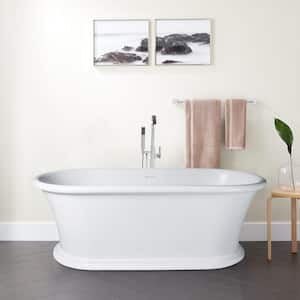
I'm certainly very drawn to Installing A Bathtub and I'm hoping you enjoyed reading the page. Loved our entry? Please share it. Let others check it out. Thanks a lot for your time spent reading it.
Get A Free Quote